
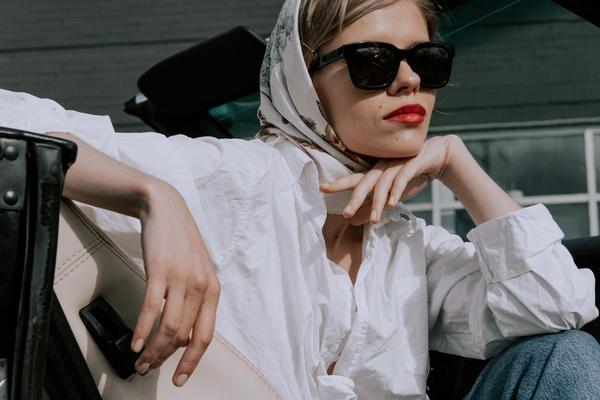
A silk scarf can change the mood of an outfit without requiring a wardrobe overhaul. Tie one around your neck with a plain T-shirt, weave it into a ponytail, or add it to a favourite handbag. The trick is choosing a fold and placement that work with what you are already wearing. These easy approaches to how to wear a silk scarf are practical enough for a normal morning, not just a carefully styled photograph.
Start With the Size and Shape of Your Scarf
Before tying anything, spread your scarf flat. A small square, roughly 50–55 cm across, is ideal for short neck knots, headbands and bag handles. A medium square around 70–90 cm offers more drape for hair wraps and loose neck ties. A long rectangular scarf lends itself to shoulder draping or a slim, trailing knot. Exact dimensions vary between brands, so test the fold rather than relying on the label.
For a neat narrow band, fold two opposite corners toward the centre, then fold again until you have the desired width. For a classic triangle, bring one corner to the opposite corner. A smooth surface helps; silk is slippery, so work on a table before placing the scarf on your body.
Easy Ways to Wear a Silk Scarf Around Your Neck
The Small Side Knot
Fold a square into a narrow band, place it around your neck and tie a gentle double knot slightly to one side. Leave short tails visible. This works especially well with a crew-neck T-shirt or open-collar shirt because the neckline gives the scarf space. Keep the knot loose enough to feel comfortable when you turn your head.
The Relaxed Front Tie
Fold a medium square into a triangle. Roll it loosely from the pointed end, then wrap the resulting band around the back of your neck and bring both ends forward. Tie once at the front and let the tails fall naturally. Among everyday neck scarf ideas, this is particularly useful when a button-down shirt feels a little plain but you do not want jewellery.
The Loose Draped Loop
With a longer silk scarf, set the midpoint at the back of your neck, bring the ends forward and let them hang. You can pass one end casually over the opposite shoulder. Avoid pulling the fabric tight: the appeal is the movement. If the print is bold, keep the clothing immediately underneath relatively simple.
Hair Scarf Styling That Stays Comfortable
Dress Up a Low Ponytail or Bun
Secure your hair first with a normal hair elastic. Fold the scarf into a strip, tie it over the elastic and allow the ends to trail. This makes a small scarf look intentional and stops the silk from having to hold the hairstyle on its own. For a low bun, wrap the strip around the base once and tuck the ends under a soft knot.
Make a Soft Headband
Fold a square into a broad band. Position the centre just behind your hairline and tie the ends beneath your hair at the nape. A couple of hairpins can help if the material slides. Keep the band flat around the ears to prevent uncomfortable bunching. Hair scarf styling works beautifully on second-day hair, especially when you need a polished look quickly.
How to Tie a Scarf on a Handbag
A scarf on a handbag introduces colour without sitting against your skin or competing with your neckline. For a quick accent, fold a small square into a slim band and knot it once around the base of a handle. Let the ends hang outside the bag so they remain visible and do not catch in the zip.
For a wrapped handle, begin at one end, wind the folded scarf around the handle in overlapping turns and finish with a small knot. This works best on a short, sturdy handle; avoid loose wrapping near closures or delicate hardware. If you change bags frequently, a single detachable knot is the simplest option.
Wear a Larger Silk Scarf Over Your Shoulders
On a mild evening, open a larger scarf and drape it across both shoulders over a sleeveless top or dress. Let the two front corners fall evenly, or take one side across your chest and over the opposite shoulder. A scarf adds a light layer and visual softness, but thin silk is not a substitute for a warm jacket.
Choose Colours, Prints and Proportions With Confidence
A useful rule for silk scarf styling is to repeat one colour already present in your outfit. For example, with dark jeans, an ivory shirt and tan loafers, a navy-and-tan printed scarf around a bag handle echoes the outfit without making everything match perfectly. Alternatively, use a contrasting colour as the only bright accent.
Think about scale as much as shade. Small, intricate prints remain readable in a neck knot or headband; larger motifs often look better opened across the shoulders. If your top is patterned, choose a scarf sharing one colour and vary the pattern scale. If you prefer a calmer look, select a solid scarf with a textured finish.
Proportion is easy to test in a mirror. Short neck tails suit compact outfits, while longer ends create movement over a plain layer. Before leaving, check that the scarf does not cover a collar detail you particularly like. For more ideas, see our guides to choosing accessories for neutral outfits and coordinating prints with everyday clothes.
Frequently Asked Questions
Can I wear a silk scarf with a T-shirt and jeans?
Absolutely. Fold a small scarf into a band, tie it loosely at the side of your neck and leave the rest of the outfit uncomplicated. It gives a basic combination a deliberate finishing detail without feeling overdressed.
How do I stop a silk scarf from slipping out of my hair?
Anchor a ponytail with an elastic before adding the scarf. For a headband, use discreet hairpins underneath and avoid a knot that is too heavy. A slightly wider fold can also sit more securely than a very thin strip.
What size silk scarf is best for beginners?
A small or medium square is versatile for neck knots, ponytails and bags. Choose a larger square if shoulder draping is your priority. The easiest size is one you can tie comfortably without excess fabric getting in the way.
Should my silk scarf match my bag or shoes?
It does not need to match exactly. Picking up one colour from your shoes, bag or clothing creates a cohesive look, while a contrasting scarf can be the focal point. Aim for balance rather than a perfectly coordinated set.
A Simple Finishing Touch
Start with one scarf and two favourite ways to wear it: perhaps a side neck knot on weekdays and a handbag tie at the weekend. Once those feel natural, experiment with a headband or shoulder drape. The best scarf styling looks easy because it fits your day, your clothes and your comfort.