
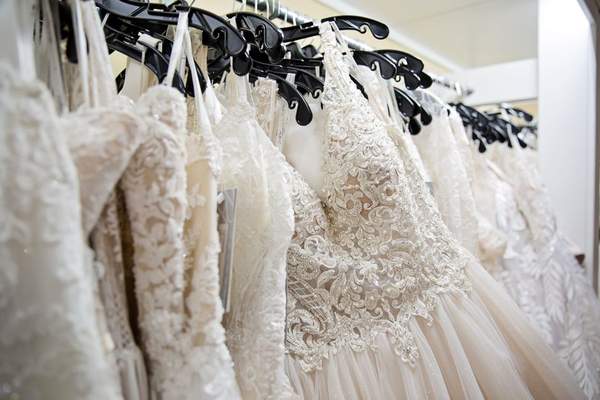
The right wedding dress undergarments can make a beautiful gown feel genuinely wearable. A bra changes how the neckline sits; underwear seams can show through satin; and shapewear that rolls at the waist can interrupt an otherwise smooth silhouette. The goal is not to reshape your body. It is to choose comfortable layers that work with the gown and stay secure through a day of movement.
Check What Your Dress Already Provides
Before buying bridal undergarments, look inside the bodice. Many gowns have cups, boning, lining, or an internal waist stay that provide shape and support. Adding another bra can create bulk or push the bust into the wrong position. Ask your alterations specialist what the existing structure does and whether cups can be adjusted or sewn in.
Built-in cups provide coverage and shape, but they do not always provide sufficient lift. Try the dress without a bra, then assess it while raising your arms, sitting, and leaning forward. A wedding dress alterations guide can help you understand which fit problems belong with the seamstress rather than with lingerie.
Choose a Wedding Dress Bra for the Neckline
Strapless and off-the-shoulder gowns
A properly fitted strapless bra or longline bustier may help when a gown lacks sufficient internal support. Its band should remain firm without digging in or slipping. If the bodice already has effective boning, sewn-in cups might create a cleaner line. Check that any straps stay concealed from the front and back.
Plunging necklines
A plunge bra with a low centre front can suit some deep V necklines. For a dramatic plunge, integrated cups or carefully placed body tape may work better. Tape offers limited support on its own. Patch-test adhesives and follow removal instructions, especially if your skin is sensitive.
Low-back and backless dresses
A standard bra band may show beneath a low back. Consider a purpose-made low-back bra, adhesive cups, or support built into the dress. Adhesive cups mainly offer coverage and modest shaping; actual lift varies. Check the full back opening in a mirror before choosing a converter or specialty bra.
Halter, square, and sheer necklines
Convertible straps can suit certain halter designs. Square necklines may accommodate a balconette bra if its edges remain hidden. Sheer lace and illusion panels need extra care because even skin-tone straps can interrupt the design. Compare cuts using a wedding dress neckline guide, then make your final choice with the gown on.
Find Underwear That Disappears Beneath the Fabric
Seamless underwear for a wedding dress is often the simplest option. Look for soft fabric, bonded or laser-cut edges, and a comfortable waistband. Briefs, shorts, and thongs can all work; the best cut is the one that stays invisible beneath your particular skirt.
Choose a shade close to your skin tone rather than assuming white is best. White underwear can be surprisingly visible through light ivory fabric. Test your choice in daylight as well as indoor lighting, especially under a thin lining.
Where the edges fall matters, too. A high-waisted brief may smooth one area while creating a ridge below the bodice. A low-rise option may sit better under a low-back design. Look at the entire silhouette instead of trusting an invisible label.
Is Bridal Shapewear Necessary?
Shapewear is optional. It can smooth clothing lines beneath a fitted gown, but it cannot replace accurate alterations. Select your usual size according to the brand’s measurements; sizing down can cause pinching, ridges, and restricted movement.
For a sheath or mermaid dress, lightweight smoothing shorts may blend the waist and upper thighs. A bodysuit can work if its neckline and back remain hidden. Under an A-line or ball gown, extra compression is often unnecessary because the skirt creates its own shape.
Try sitting, eating, and using the bathroom while wearing any shaping garment. If it makes ordinary movement difficult, it is not a practical wedding-day choice. Breathable shorts may also help with thigh rubbing without needing strong compression.
Let the Fabric Make the Final Decision
Crepe, charmeuse, and smooth satin often show seams, lace texture, and abrupt shapewear edges more than heavily embellished fabrics. Under a close-fitting satin slip dress, even a waistband ridge can catch the light. A soft, minimal underlayer may give a smoother result than a structured one.
With lace, tulle, or sheer panels, watch for colour differences beneath the layers. If the skirt becomes transparent in daylight, discuss a suitable lining or slip with your seamstress. Test a separate slip first because it may bunch beneath the gown.
Bring Your Final Undergarments to Every Fitting
A bra changes bust position; shapewear changes how fabric sits at the waist and hips. The seamstress should fit the gown over the foundation you intend to wear on the wedding day. Bring the same bra, underwear or shapewear, and shoes whenever possible.
Consider a bride whose fitted crepe gown is pinned over ordinary briefs. She later switches to firm high-waisted shorts. Their upper edge now forms a ridge, and the bodice feels tighter when sitting. Trying the shorts before alterations would have exposed the issue early enough to change her foundation or the fit.
At the final fitting, check front, side, and back views. Sit, walk, climb a step, hug someone, and practise a few dance moves. Those actions reveal slipping bands and visible edges that a standing mirror check can miss. Bring a wedding dress fitting checklist to keep the trial focused.
Prepare for the Wedding Day
Wear the exact foundation you tested at your final fitting, rather than a new style. If using adhesive products, follow their skin-preparation directions and carry an appropriate spare. Pack smooth backup underwear, and show a trusted attendant how internal hooks or fastenings work.
You should be able to breathe, eat, sit, and dance without constantly tugging at your outfit. If a piece needs repeated adjustment during your trial, change it before the ceremony.
Frequently Asked Questions
Do I need a bra under my wedding dress?
Not always. A well-structured bodice may offer sufficient support on its own. Otherwise, a correctly fitted bra or tailored support solution may help. Test the full outfit before deciding.
What colour underwear is best under an ivory wedding dress?
A colour close to your own skin tone is often less visible than white under thin ivory fabric. Confirm by checking the dress in natural light.
Should I wear shapewear under a fitted wedding dress?
Only if it improves comfort and how the fabric lies. Choose a well-fitting style without visible edges and wear it to alterations appointments.
When should I buy wedding dress undergarments?
Ideally, choose them before your first alterations fitting. That gives your seamstress the intended foundation to work with and leaves time to exchange anything uncomfortable.
The Best Foundation Is the One You Forget About
Good bridal undergarments support the gown without competing with it. Begin with the structure already inside the dress, match additional pieces to the neckline and fabric, and test everything in motion. A secure, smooth fit comes from thoughtful choices and accurate alterations, not from wearing more layers than you need.