
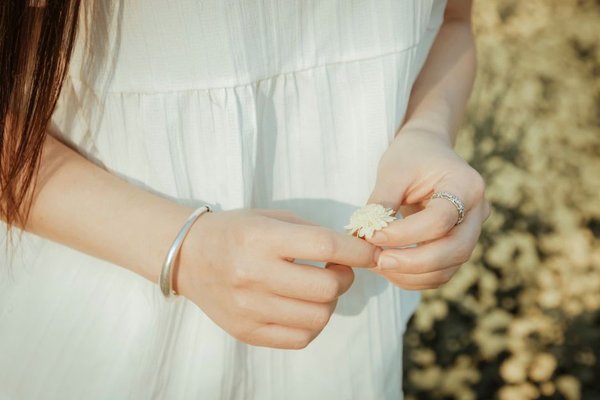
Dainty jewelry and statement jewelry can change the mood of the same outfit in different ways. A fine chain, tiny hoop, or slim stacking ring adds polish without demanding attention, while an oversized earring or sculptural necklace can become the visual center of your look. Choosing between them is less about following a rule and more about understanding how you dress.
The dainty jewelry vs statement jewelry debate rarely has one winner. The useful question is which style feels natural for your routine, and when the opposite choice can make an outfit more interesting.
The Core Difference Is Visual Impact
Dainty jewelry is usually defined by light visual weight: thin chains, small pendants, delicate studs, narrow bands, tiny charms, and subtle hoops. These pieces tend to blend into an outfit rather than dominate it. They work especially well with a minimalist jewelry style because they add detail while preserving a clean silhouette.
Statement jewelry does the reverse. It uses scale, shape, color, texture, or shine to attract attention. Think chunky cuffs, large hoops, chandelier earrings, cocktail rings, or bold pendants. The bold jewelry trend changes over time, but the principle stays the same: one piece is intended to be noticed.
Which Style Works Better With Your Wardrobe?
Your clothing often gives the clearest answer. If you rely on tailored basics, neutral knits, crisp shirts, or simple denim, dainty pieces can reinforce that refined look because they rarely compete with necklines, prints, or other accessories.
Statement jewelry can be especially effective when simple foundations need contrast. A black crew-neck dress may feel restrained with tiny studs, but architectural earrings give it an immediate focal point. A patterned blouse with dramatic sleeves may already have enough visual activity, making smaller jewelry the more balanced choice.
A practical jewelry style comparison is simple: if the clothes have a clear focal point, choose jewelry that supports it. If the outfit feels flat, a statement piece can supply the missing emphasis.
Dainty Jewelry Is Easier to Layer
One advantage of delicate jewelry is flexibility. Small pieces can be worn together without making the outfit feel crowded. A short chain, a longer pendant, two thin rings, and small hoops can create detail across several areas while still reading as understated.
This is especially useful for ear styling. Multiple piercings often look cohesive when pieces share a metal tone or repeat a shape at different scales. A tiny stud beside a slim huggie creates progression rather than competition. Ear stacking ideas can also help you plan combinations that feel intentional rather than random.
Statement Jewelry Creates a Faster Focal Point
Statement pieces are useful when you want maximum effect with minimal styling effort. One striking accessory can do the work of several smaller ones, especially when a simple look needs more personality.
For example, imagine a white button-down, straight-leg jeans, and loafers. With a fine gold chain and small studs, the outfit feels quiet and polished. Swap those for broad hammered-metal earrings and the same clothes feel more directional. Nothing else needs to change.
The trade-off is that bold pieces require more spacing. Large earrings may compete with a dramatic necklace, while a heavy cuff can fight for attention with multiple oversized rings. When one item is visually strong, giving it room usually makes the final look feel more deliberate.
Comfort and Daily Routine Matter More Than Trends
Style is only useful if you will actually wear it. Dainty jewelry tends to be easier for long workdays, travel, layered clothing, and situations where accessories need to stay out of the way. Small earrings are less likely to catch on scarves or hair, while slim necklaces sit easily beneath jackets.
Statement pieces may be heavier or more movement-sensitive. Large hoops may be perfect for dinner yet annoying with headphones. A chunky ring can look excellent but feel cumbersome if you type all day. Before buying, picture a normal day rather than an ideal outfit. That simple test often predicts whether an accessory will become a favorite or remain in the jewelry box.
You Do Not Have to Choose One Identity
Personal style is rarely as fixed as “minimalist” or “bold.” You might wear delicate jewelry most days and reserve one dramatic piece for certain outfits. You can also mix scales, such as pairing a chunky ring with small earrings or one bold ear piece with tiny stacked studs.
A useful formula is to choose one dominant area. If your earrings are large, keep the neck quieter. If you wear layered necklaces, use simpler earrings. If several rings are the focus, let the wrist stay relatively clean. This gives the eye somewhere to rest and makes mixed jewelry feel intentional.
If you enjoy experimenting, how to layer necklaces is a useful topic for combining fine and heavier chains without crowding the neckline. A jewelry care guide is also helpful because delicate chains and plated statement pieces may need different storage and cleaning habits.
How to Decide What Fits Your Style
Start with frequency. Look at what you wear three or four days a week, not what you imagine wearing to a special event. If your outfits are streamlined and you prefer accessories you can leave on all day, dainty jewelry will probably earn more wear. If you enjoy changing the mood of simple outfits and like accessories as conversation pieces, statement jewelry may suit you better.
Then test contrast. Put on a typical outfit and try one delicate option followed by one bold option. Take a quick photo of each. Photos make proportions easier to judge than a close mirror view. Notice whether the jewelry complements your face, neckline, hairstyle, and clothing rather than evaluating the piece by itself.
FAQ
Can you wear dainty and statement jewelry together?
Yes. Let one piece lead and keep the surrounding jewelry quieter. Large earrings with fine rings, or a bold necklace with tiny studs, can create contrast without looking overloaded.
Is dainty jewelry better for everyday wear?
It often is because smaller pieces are lightweight, versatile, and easy to pair with different outfits. Still, everyday suitability depends on your routine; some people make large hoops or chunky rings part of their daily uniform.
Does statement jewelry only work for evening outfits?
No. A bold accessory can work just as well in daytime styling, especially with simple clothing. One sculptural necklace or pair of oversized earrings can elevate jeans, knitwear, tailoring, or a basic dress without making the outfit feel formal.
Which style is more timeless?
Both can be timeless when the design suits your wardrobe. Fine chains, studs, and simple bands have lasting appeal, but so do classic cuffs, hoops, and sculptural pieces. Trend-driven colors or exaggerated proportions may date faster than clean, versatile shapes.
Finding Your Balance
The best choice between dainty jewelry and statement jewelry is the one that supports how you already dress while giving you room to experiment. Delicate pieces excel at quiet polish, easy layering, and repeat wear. Bold pieces create instant focus and can transform simple clothing with little effort. Build around the style you reach for most often, then add a few contrasting pieces for days when you want a different mood.