
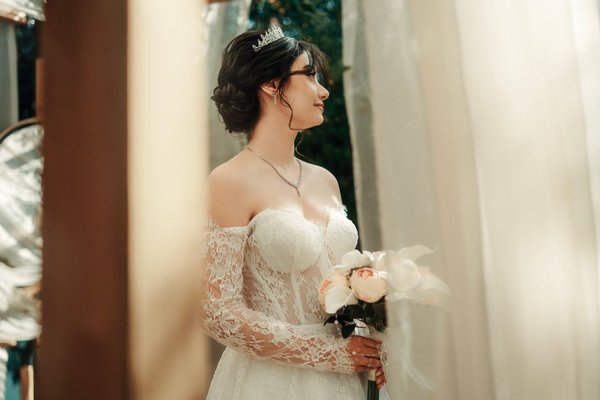
Finding petite wedding dresses is less about following a list of forbidden silhouettes and more about noticing where a gown meets your body. A dress can fit around the bust and hips yet still feel oversized when its waist seam sits too low, its neckline drops too far, or the skirt begins to flare below your natural proportions. Those details are easy to overlook when a bridal sample is clipped at the back and several inches too long.
Start with proportions, not the size label
Petite usually refers to shorter stature, often around 5 feet 4 inches or below in clothing ranges, but height alone does not explain bridal fit. Two brides of the same height may have different torso lengths, shoulder widths and leg proportions. One may need only a hem adjustment; another may need the bodice shortened before the waistline falls correctly.
When trying on a gown, look at the position of the bust shaping, waist seam, armholes and skirt flare. Ask the stylist to pin the dress at your actual waist rather than simply pulling excess fabric tight behind you. This reveals how the design should sit once altered.
Which silhouettes suit a petite frame?
A-line gowns offer adaptable proportions
An A-line gown fits through the upper body and widens gradually towards the hem. That transition can give shorter brides a defined waist without requiring an enormous skirt. Look for a flare that begins at a flattering point and fabric light enough to move easily. A softer A-line is worth trying if heavy ball-gown layers overwhelm your frame.
Sheath and column dresses create a clean line
Minimal seams and controlled volume make sheath and column styles worth exploring. They can look especially polished in crepe or softly draped satin, though the fabric should skim rather than pull across the hips. Comparing these with fuller wedding dresses for short brides can clarify how much volume you actually enjoy.
Ball gowns and fitted flares are still options
A petite bride can absolutely wear a dramatic ball gown, mermaid or fit-and-flare dress. Check where the volume starts and whether the skirt moves with you. A low flare may sit below the intended point on a shorter wearer. With ball gowns, compare the weight and width of the underskirt. Your taste matters more than a supposed height rule.
Choose a waistline that belongs to your body
The position of a waist seam can change the entire look of petite bridal gowns. A natural-waist seam often gives definition, while a slightly raised waist may create more uninterrupted skirt length. Empire styles, with shaping beneath the bust, offer another proportion to try. None is automatically best; the neckline and skirt cut affect the result.
Necklines, straps and sleeves deserve attention
A V-neck or sweetheart neckline may create a vertical emphasis, but a high neck, square neck or off-the-shoulder design can look equally striking when properly scaled. Check that the neckline does not gape and the bust cups sit at the right height. A plunging sample made for a longer torso may seem deeper than it will after adjustment.
Excess shoulder-to-bust length can make straps slip or shift the bodice downward. Sleeves should allow you to lift your arms and hug someone comfortably. A bridal neckline guide can spark ideas, but your fitting-room movement test is just as useful.
Plan the hemline before committing
Floor-length gowns need a shoe-height decision
The correct hem depends on your shoes, posture and skirt construction. Bring footwear with the heel height you intend to wear to alteration appointments. The front should clear the floor enough for safe walking without looking unexpectedly cropped. If you will change from heels to flats, discuss the difference with your seamstress; one hem may not work perfectly with both.
Tea-length and midi gowns offer another balance
A shorter wedding dress is not a compromise. A carefully placed tea-length hem can showcase shoes and make a vintage silhouette feel lively. Yet a hem at the widest part of the calf looks different from one slightly higher or lower. Try alternatives with your actual shoes rather than relying on a stated dress length.
Inspect lace edging, appliqués and beading near the hem. Removing substantial length may require repositioning decorative borders or reshaping several layers. Ask for an alteration estimate before buying a gown with intricate edging.
Make embellishment work with the silhouette
Large lace motifs, heavy appliqué and oversized bows can dominate a smaller frame, but petite brides need not avoid decoration. Placement matters more. Embroidery near the neckline can draw attention towards the face, while spaced motifs allow the gown’s shape to remain visible.
Build alterations into your buying decision
Petite bridal fit may involve shortening straps, reshaping the bodice, adjusting a waist seam, altering sleeves, hemming and adding a bustle for the train. The difficulty depends on seams, lining, embellishment and internal structure. A bridal alterations specialist can explain what is straightforward and what might change the design.
Imagine a bride who is 5 feet 1 inch tall and loves a lace A-line sample. Pinned at the back, its skirt looks beautiful, but the waist rests below her natural waist and the scalloped hem lies far beyond her shoes. Shortening the skirt alone will not correct the waist, and cutting through the lace may spoil its finish. Before ordering, she can ask whether the designer offers a shorter bodice or custom length, and whether a seamstress can preserve the border.
Request a written estimate, confirm the fitting schedule and allow additional time for complex changes. A wedding dress alterations checklist can help you remember the shoes, underwear and accessories needed at each appointment.
Frequently asked questions
What wedding dress style is best for petite brides?
There is no universal winner. A-line, sheath and well-proportioned fit-and-flare gowns are useful starting points, but ball gowns and other silhouettes can work when the waist, flare and length suit your body.
Do petite wedding dresses always need alterations?
No. A gown offered in petite proportions or made to your measurements may need little adjustment. Standard-length dresses often need hemming, and some require bodice or strap corrections.
Can a short bride wear a long train?
Yes. Test the train’s weight and movement, and discuss a secure bustle for the reception. Choose a train you enjoy wearing and can manage comfortably.
Should I choose heels to look taller?
Only if you want them. Comfortable flats or low heels can work beautifully. Choose footwear early enough that the final hem can be fitted around its actual height.
Find the gown that fits your proportions and personality
The strongest choice is not necessarily the dress that adds the most apparent height. It is the one with a neckline, waist and hem that sit where they should, freedom to move, and details you genuinely love. Shop with an open mind, assess the alteration work before purchasing, and judge each gown on your own frame rather than the model photograph.