
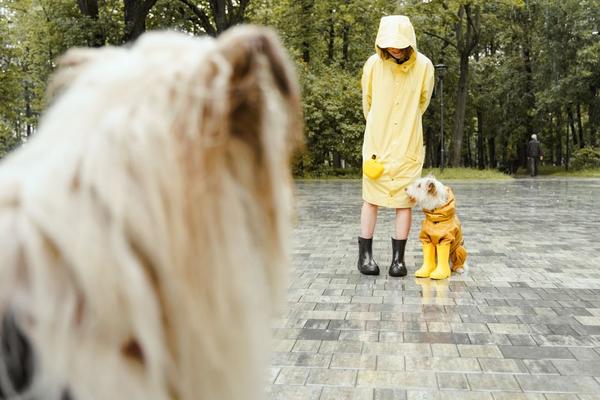
Matching outfits with your dog can look charming and polished when the goal is coordination rather than imitation. The easiest way to avoid the “costume” effect is to treat your dog’s look as one more accessory in the overall outfit. A shared colour, repeated texture, or similar level of formality is usually enough to make the connection obvious without making either of you look over-styled.
That approach also makes matching pet and owner outfits easier to wear in real life. You do not need a mini version of your jacket or a novelty print from head to toe. Start with what you already wear, think about what your dog is comfortable in, and build the visual link from there.
Start With One Shared Element
The most reliable rule is to match one thing, not everything. Choose a single element that appears in both looks: colour, pattern, fabric mood, or occasion. If you are wearing an olive overshirt, for example, your dog might wear an olive collar or bandana. If your outfit is built around cream knitwear, an oatmeal harness can create the same effect without looking forced.
Use a colour family instead of an exact shade
Exact colour matching can look more theatrical than stylish. A softer approach is to stay within the same colour family. Navy can pair with denim blue, rust can sit beside camel, and forest green can work with sage.
If your wardrobe is mostly neutral, you have an easy starting point. Black, charcoal, beige, cream, tan, and denim create a flexible base for coordinated pet style. Add one accent colour through a leash, bandana, scarf, cap, or socks.
Let Your Dog’s Comfort Set the Limit
The best-looking outfit is useless if your dog is distracted, overheated, restricted, or trying to remove it. Some dogs are comfortable in lightweight sweaters or coats, while others prefer nothing more than their regular collar or harness. Matching should always work around that preference.
Check that any wearable item allows normal movement around the shoulders, neck, and legs. Avoid dangling decorations that can be chewed, and make sure fasteners do not catch fur or press into the skin. In warm weather, keep extra layers minimal and prioritise lightweight accessories.
A practical test is simple: put the item on at home for a few minutes before a walk, café visit, or photo. If your dog moves normally and ignores it, that is a good sign. If they freeze, scratch, chew, or repeatedly shake, choose a less intrusive option such as a coordinated collar.
Match the Occasion, Not Just the Colours
Good coordination depends on context. A polished city outfit calls for something different from a muddy weekend walk. Matching the level of formality makes dog and owner fashion feel more natural.
For everyday walks
Keep things simple: denim, canvas, cotton, and practical outerwear are easy to echo with a harness, lead, bandana, or lightweight coat. A black utility jacket with a black harness, for example, creates a clean visual connection without looking themed.
For brunches, markets, and social outings
Subtle pattern matching works well here. If you are wearing stripes, checks, or a small floral print, your dog can wear one accessory with a related pattern or colour. Avoid using the same busy print across both full outfits; one repeated detail is usually enough.
For photos and special occasions
Think in terms of a shared palette. Suppose you are taking autumn photos and plan to wear a camel coat, dark jeans, and burgundy knitwear. Your dog could wear a burgundy bandana with a tan leather collar. The result reads as coordinated immediately, yet neither look feels like a costume.
Natural supporting topics for this look include dog bandana styling ideas and how to choose a dog collar colour, especially for readers who want coordination without adding clothing.
Work With Your Dog’s Coat Colour
Your dog’s natural colouring is already part of the palette, so use it. Black coats often make saturated colours such as red, cobalt, emerald, or mustard stand out. Cream and golden coats pair easily with earthy tones, muted greens, navy, and burgundy. Grey coats can look polished with cool neutrals, dusty blues, or deep jewel tones.
You do not need strict colour rules, but contrast helps an accessory stand out. If a bandana or harness disappears into the coat, the matching effect may be lost in person and in photographs.
Use Texture When Colour Matching Feels Too Obvious
Texture is one of the easiest ways to make matching outfits with your dog feel sophisticated. Instead of repeating the same colour, repeat the material mood. A quilted jacket can pair with a quilted dog coat, while a sporty windbreaker works naturally with a technical harness.
It also lets several people include the dog without dressing identically.
Keep Patterns Under Control
When one part of the look is patterned, let the rest breathe. If your dog is wearing a tartan bandana, pick one colour from the tartan for your sweater rather than wearing tartan yourself. If you are in a bold printed dress, your dog can wear a solid accessory that matches one shade in the print.
This “pull one colour from the pattern” technique is a simple way to create matching pet and owner outfits that look styled rather than staged.
Build a Small Matching Capsule
You do not need a drawer full of pet clothing. Start with one neutral collar or harness, one everyday bandana in a colour you often wear, and one seasonal piece such as a raincoat or winter sweater if your dog genuinely needs it.
Choose your own outfit first and add the dog’s accessory last. This keeps the process quick and prevents the pet item from dictating your entire wardrobe. A practical dog accessory wardrobe is another useful topic to explore.
FAQ
Do matching outfits with your dog need to be identical?
No. Matching usually looks better when you repeat just one element, such as a colour, texture, or level of formality. Exact copies are more likely to feel like costumes.
What is the easiest way to match with a dog that dislikes clothes?
Use an accessory your dog already wears comfortably. A collar, harness, lead, or lightweight bandana can provide enough colour coordination without adding a full garment.
How many colours should be in a coordinated look?
Two or three main colours are usually easy to manage. One can act as the shared colour, while the others remain neutral or complementary.
Can dog and owner fashion still be practical?
Yes. Practicality should come first. Weather-appropriate fabrics, secure fastenings, comfortable movement, and washable materials matter more than a perfect visual match.
Make It Look Like Your Style, Just Shared
The most successful matching outfits with your dog do not announce themselves from across the street. They simply look connected. Choose one shared detail, keep your dog comfortable, work with the occasion, and let both outfits retain some individuality. That balance is what turns coordinated pet style from a novelty into something you can actually enjoy wearing.