
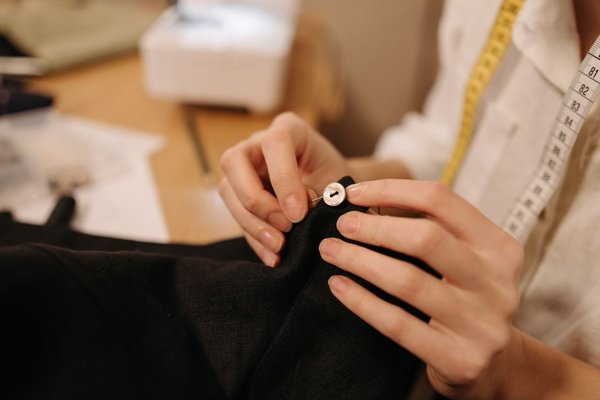
An ill-fitting garment can be difficult to judge. A blazer may be beautifully made but too wide through the waist; inexpensive trousers may need more work than they are worth; a favourite dress may have sentimental value that changes the calculation completely. The useful question is not simply, “Should I alter my clothes?” It is whether the item has enough quality, wear left, and alteration potential to justify the work.
The best clothing repair decisions compare replacement cost, condition, alteration complexity, and likely future wear. That is more practical than assuming alteration is always sustainable or replacement is always cheaper.
Start With Condition Before Cost
Before asking whether a tailoring cost is worth it, inspect the garment itself. Alterations make the most sense when the underlying clothing is sound. Good fabric, secure seams, working closures, and a style you like give a tailor something worthwhile to improve.
Tailoring cannot restore fabric that is thinning, badly pilled, stretched, or weakened around stress points. If several problems appear at once, improving the fit may only delay replacement. A simple rule helps: fit problems can often be changed; worn-out material usually cannot.
Clothes That Are Often Worth Altering
Well-Made Jackets, Coats, and Blazers
Structured outerwear can be a strong candidate because replacing a well-made piece may cost much more than adjusting one that already suits your wardrobe. Shortening sleeves, refining the waist, or making modest changes through the body can improve the fit without changing the garment’s character.
Construction matters. Functional sleeve buttons, heavy linings, shoulder structure, and detailed finishes can make a simple-looking job complex. Ask what must be opened or rebuilt before approving it.
Quality Trousers and Jeans With One Clear Problem
Hemming trousers is one of the clearest examples of an alteration that can extend useful life. A modest waist adjustment may also make sense when the garment already fits well through the hips, rise, and legs.
Jeans need a closer look. A hem or small waist correction can be sensible, but changing the rise or correcting several fit issues may demand more work than the garment justifies. If the whole silhouette needs changing, replacement is often cleaner.
Dresses You Expect to Wear Repeatedly
A dress for work, events, or regular social use can justify tailoring when the fabric and basic design are right. Adjusting straps, refining the waist, taking in side seams, or correcting a hem can turn an almost-right dress into a dependable one.
Expected wear is the key. A dress you will wear many more times is a stronger candidate than a trend-led piece you may wear once.
Sentimental or Hard-to-Replace Pieces
Replacement value is not always financial. A vintage coat, inherited garment, or discontinued design may be worth preserving even when alteration costs exceed a similar second-hand item. For unusual fabrics or vintage construction, choose an experienced tailor.
When Replacing Usually Makes More Sense
The Garment Has Several Fit Problems
One small adjustment is very different from rebuilding a garment. If a shirt is too narrow in the shoulders, too short in the body, and tight at the cuffs, there may be too little fabric to correct everything. Changes to shoulders and armholes can also affect several connected areas.
When the problem begins with the basic cut rather than one measurement, another size or style is usually a better starting point.
The Fabric Is Near the End of Its Life
Look for shiny wear, thinning material, stretched elastic, damaged coatings, repeated seam failure, or weakened areas around pockets and hems. Repairing one section makes little sense if another is likely to fail soon.
Sustainable fashion is more nuanced here. Repair is useful when it creates meaningful additional wear; repeatedly investing in a failing garment is not automatically the greener choice.
The Item Is Easy to Replace and Rarely Worn
Low price alone does not mean clothing should be discarded. A simple hem on an inexpensive skirt you love may be worthwhile. But if an item is rarely worn and needs several alterations, replacement, resale, or donation may be more rational.
Related internal topics that fit naturally here include choosing better-quality clothes, wardrobe care and repair, and understanding common clothing alterations.
Use a Cost-and-Wear Test
Do not compare the alteration fee only with what you originally paid. Compare it with the cost of getting a replacement you would actually be happy to wear, then estimate future use.
Imagine a wool blazer that fits at the shoulders but feels boxy at the waist. The fabric is excellent, you wear it regularly, and a similar replacement would be expensive. One targeted waist alteration could unlock years of additional wear.
Compare that with a low-cost blouse that pulls at the shoulders, gaps at the chest, has worn fabric, and is no longer a style you reach for. Even a low tailoring quote would not solve the main problems. Replacement or a second-hand alternative may be better.
That is the most useful way to judge whether tailoring cost is worth it: ask what the alteration buys you in future wear, not merely whether the fee feels high.
Questions to Ask Before Approving an Alteration
Ask what will change, what cannot change, and whether the finished garment will still hang naturally. Check whether there is enough seam allowance and whether old fold lines or stitch marks may remain after fabric is let out or shortened.
Wear the shoes and undergarments you expect to use with the garment during fitting. Trouser length, dress drape, and jacket fit can change depending on footwear and layers.
FAQ
Should I alter my clothes if the alteration costs more than I paid?
Possibly. The original price is only one factor. Consider quality, replacement difficulty, how much you like the garment, and how often you will wear it afterward. A discounted high-quality item can still be worth tailoring.
Which alterations are usually easiest to justify?
Simple hems, modest waist adjustments, strap shortening, and straightforward side-seam changes are often easier to evaluate than major structural work. Difficulty still depends on fabric, lining, seam allowance, embellishment, and construction.
Can every garment be made smaller or larger?
No. Making a garment larger requires enough seam allowance or extra material, while major reductions can disrupt pockets, patterns, proportions, and seam placement. A tailor should assess feasibility before work begins.
Is altering clothing always more sustainable than replacing it?
No. Alteration is most useful when it keeps a sound garment in active use longer. If the fabric is failing, the item will remain unworn, or extensive reconstruction is required, replacing it with a durable, better-fitting option may be more sensible.
Make the Decision Based on Future Wear
The clothes most worth altering usually have good material, a fundamentally suitable cut, and one or two correctable problems. Worn-out garments, pieces with several major fit issues, or clothing you are unlikely to wear again are weaker candidates.
Think in terms of useful life. If one targeted change will turn a neglected but sound garment into something you will reach for regularly, tailoring has a clear purpose. If the work is trying to rescue poor fabric, the wrong cut, and a style you no longer like all at once, replacement is usually the more practical choice.